
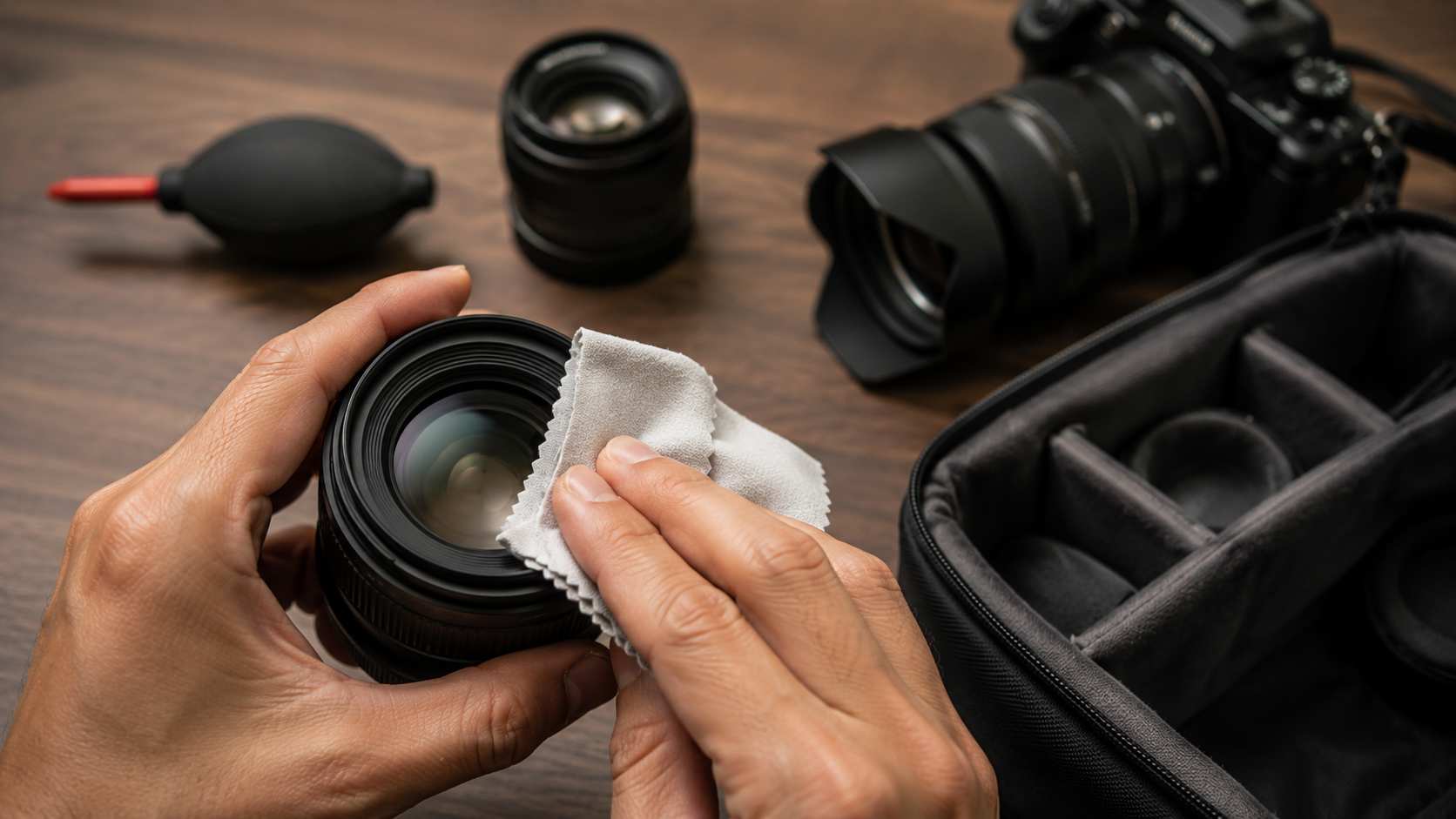
How Should You Clean and Store Your Lenses?
Most lens damage is caused by cleaning rather than by dirt. A small amount of dust does nothing to a photograph, and a scratched coating is permanent.
Most camera advice is either a spec sheet or a sales pitch. These guides explain what the kit actually does, which differences you will notice in a photograph and which you will not, and how to work out what is worth spending money on for the pictures you want to take.
Most lens damage is caused by cleaning rather than by dirt. A small amount of dust does nothing to a photograph, and a scratched coating is permanent.
Mirrorless bodies will take almost any lens ever made with the right ring. What you gain is cheap and interesting glass, and what you lose is usually automation.
Film is slower, more expensive per frame and less convenient in every measurable way. Those are the reasons people take it up, and there are practical benefits that carry back into digital work.
Independent lens makers have moved from being the budget option to producing some of the best glass available. The remaining differences are worth knowing before you save the money.
The used market is where the best value in photography sits, provided you know what wears out, what is repairable and what should make you walk away.
Most lenses are softest wide open, best around two or three stops down, and softer again at the smallest apertures. Two different physical effects are responsible.
New bodies arrive every couple of years and most of them will not improve your photographs. Here are the situations where an upgrade genuinely fixes something, and the ones where it does not.
Straight lines bowing outwards or pinching inwards is normal, expected and largely designed for. Whether to correct it depends on what is in the picture.
Weather sealing is a design intention rather than a guarantee, it depends on the lens as much as the body, and it matters enormously to some photographers and not at all to others.
Plenty of lenses are labelled macro and only some of them are. The difference is magnification ratio, and it decides whether you can fill the frame with a small subject.
Most cameras record video and only some are pleasant to shoot video with. The differences are in overheating, autofocus, rolling shutter and audio rather than in resolution numbers.
Wide lenses promise to fit everything in and frequently deliver empty pictures with stretched faces. The failures are predictable, which means they are avoidable.