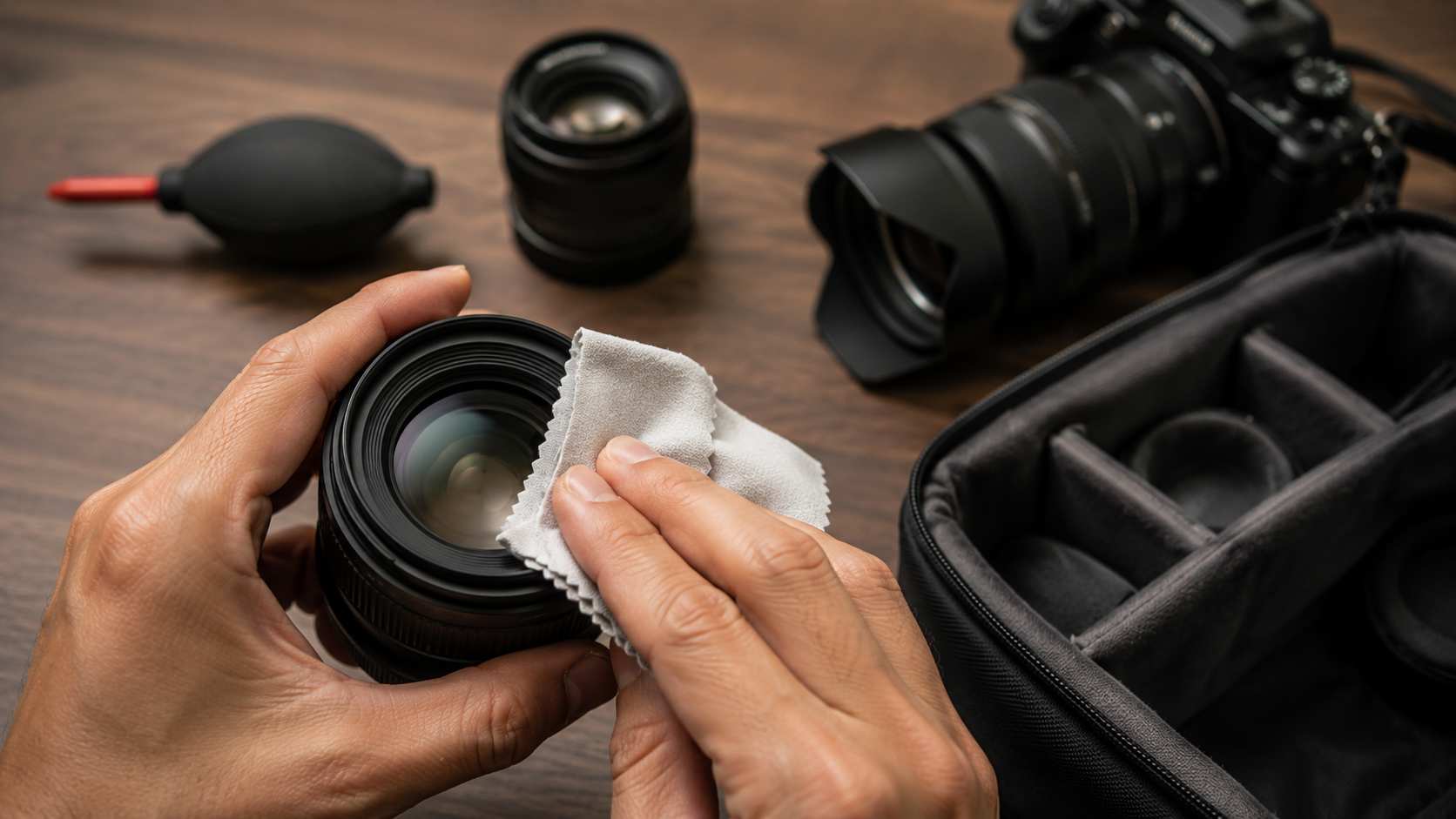
Almost every manufacturer makes a fifty millimetre lens with a maximum aperture around f1.8, sells it for a fraction of the price of anything else in the range, and it is consistently one of the best purchases a photographer can make. The nickname is affectionate and the recommendation is sound, though it comes with conditions.
Why it can be so cheap
The fifty millimetre design is the oldest and most refined in photography. Because the focal length is close to the distance between the lens and the sensor, the optical formula can be simple, symmetrical and made with relatively few elements. Manufacturers have been producing them in enormous quantities for decades, tooling costs are long since paid off, and the result is a lens that costs less than a good filter and outperforms lenses many times its price at certain settings.
What it gives you over a kit zoom
- Around three stops more light. At the fifty millimetre setting a kit zoom is typically f5.6. At f1.8 the prime gathers roughly eight times as much, which is the difference between a blurred indoor photograph and a sharp one.
- Genuinely shallow depth of field. Backgrounds dissolve, subjects separate, and clutter stops competing for attention.
- Better rendering. Contrast and colour from a simple prime often look cleaner than from a variable aperture zoom.
- Weight. It is small enough that the camera stops feeling like equipment.
- A fixed viewpoint. You compose with your feet, which is a habit that improves photographs regardless of what lens you eventually use.
The crop sensor complication
Fifty millimetres on full frame gives a natural, slightly narrow view. On an APS-C body the same lens frames like seventy five millimetres, which is a short telephoto. That is excellent for portraits and awkward indoors, since you will find yourself backing into furniture.
If your camera has a crop sensor and you want the classic standard view, look for a thirty or thirty five millimetre prime instead. Micro four thirds users want around twenty five millimetres. The lens to buy depends on the body, and this is the most common mistake people make when following the advice.
What it is genuinely good at
Portraits of one or two people, particularly on full frame. Indoor photography without flash. Available light work in the evening. Food, still life and details. Learning what aperture actually does, because the effect at f1.8 is unmistakable. And travelling light, since a small body with a fifty on it goes places a bag will not.
Where it will frustrate you
Group photographs in a small room, where you cannot get far enough back. Landscapes, where fifty is neither wide enough for sweep nor long enough for compression, though it can be used deliberately. Anything at a distance. And wide open performance on the cheapest versions, which are often soft and low in contrast at f1.8 and sharpen up considerably by f2.8.
Autofocus on budget fifties is also frequently the weakest part. Older screw driven versions are noisy and slow, and some hunt in low light, which is exactly where you wanted to use them.
What to buy
The manufacturer own brand f1.8 is the standard answer and is usually the best value. The f1.4 versions cost three to five times more for two thirds of a stop and better construction, which is worth it only if you shoot wide open regularly. Third party options often offer better optics for the money at the cost of larger size.
Older manual focus fifties from film cameras cost very little, adapt easily to mirrorless bodies and are an excellent way to learn focusing and exposure, provided you are content to work slowly.
The honest summary
It is not the best lens you will own and it may be the most useful one you buy first. Spend a month using nothing else, and the combination of learning to move and seeing what a wide aperture does will teach you more than any upgrade costing ten times as much.